
Full Fastener Production Line Overview (Factory Capability Introduction)
In B2B fastener sourcing, buyers are not simply purchasing screws or bolts—they are evaluating the manufacturer’s capability to ensure consistent quality, stable mechanical performance, and long-term supply reliability. A complete and well-controlled production line is the foundation of these expectations, especially for construction and industrial fasteners where failure risk directly affects project safety and cost.
At JLHY, fastener manufacturing is built on a fully integrated production system that covers every stage from raw material preparation to final packaging and export shipment. This integration allows better control over quality consistency, production efficiency, and customization capability for global customers.
The process begins with raw material selection, typically high-quality carbon steel or stainless steel wire rods depending on the application. Before forming, the material undergoes strict inspection of chemical composition and surface condition to ensure stability in later mechanical performance. The wire is then processed through wire drawing to achieve precise diameter control and proper surface smoothness, which directly affects both forming accuracy and thread quality.
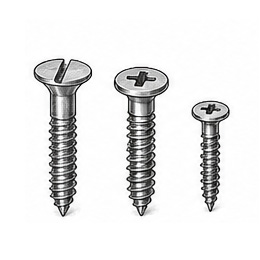
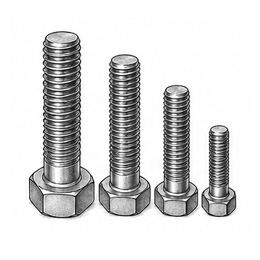
Once the material is prepared, the fastener enters the cold heading stage, which is one of the most critical forming processes in modern manufacturing. In this stage, high-speed cold heading machines cut and shape the wire into precise screw blanks under extreme pressure. The head types—such as pan head, countersunk head, hex head, or wafer head—are formed in a fraction of a second. Compared to machining, cold heading improves production efficiency and also enhances internal grain flow, resulting in better structural strength of the fastener.
After forming, the next key step is thread rolling. Instead of cutting material away, thread rolling uses hardened dies to press and form threads onto the screw body. This process compresses the metal structure along the thread profile, significantly improving tensile strength, fatigue resistance, and overall durability. For structural applications such as steel construction or heavy-duty assembly, thread rolling is essential to ensure long-term performance under load.
Heat treatment follows as the stage that determines the final mechanical properties of the fastener. Through controlled processes such as carburizing, quenching, and tempering, the hardness and toughness of the screw are carefully balanced. This ensures that fasteners meet different strength grades such as 4.8, 8.8, 10.9, or 12.9 depending on application requirements. Proper heat treatment is especially important because it directly affects break resistance, installation performance, and safety in real-world usage.
After mechanical properties are stabilized, surface treatment is applied to enhance corrosion resistance and adapt the fastener to different working environments. Depending on customer requirements and application scenarios, coatings may include zinc plating, phosphate coating, Ruspert coating, or zinc flake systems such as Dacromet. Each coating system provides different levels of corrosion protection, making it possible to serve both indoor drywall applications and harsh outdoor environments such as roofing, coastal construction, or industrial facilities.
Quality control is embedded throughout the entire production process rather than being limited to final inspection. Incoming raw materials are verified for consistency, in-process dimensions are continuously monitored, and finished products undergo mechanical testing such as hardness, tensile strength, and torque resistance. For export markets, salt spray testing is often used to validate corrosion resistance performance. This multi-layer inspection system ensures batch stability, which is critical for large-volume international orders.
The final stage of production involves packaging, warehousing, and export preparation. Fasteners are counted either by weight or automated systems, then packed into cartons, buckets, or bulk packaging depending on customer requirements. OEM labeling and private branding are also supported for distributors and importers. Proper palletizing and container loading processes ensure safe transportation and efficient logistics handling for global shipments.
With this fully integrated manufacturing system, JLHY is able to support a wide range of fastener products including drywall screws, self-tapping screws, and self-drilling screws for construction and industrial applications. More importantly, this production structure ensures stable quality output, scalable capacity, and reliable delivery schedules for long-term B2B cooperation.
A complete fastener production line is not only about manufacturing capabilitym, it is about process control, engineering consistency, and export reliability. JLHY’s integrated system is designed to meet the expectations of global buyers who require not only competitive pricing, but also dependable quality and long-term supply assurance.