
How Fasteners Are Manufactured: A Buyer’s Guide to Quality, Strength, and Reliability
Selecting the right fastener supplier requires more than comparing prices. For buyers, importers, and project managers, understanding how fasteners are manufactured is essential to evaluating product quality, performance, and long-term reliability. This guide explains the key stages of fastener manufacturing and what buyers should look for at each step when sourcing screws, bolts, and related products.
Why Manufacturing Process Matters to Fastener Buyers
Fasteners may appear simple, but their performance depends heavily on material quality, forming accuracy, heat treatment, and surface protection. Inconsistent manufacturing can lead to issues such as head breakage, poor torque performance, thread failure, or premature corrosion. Buyers who understand the production process are better equipped to assess suppliers and avoid quality risks. As an experienced exporter, JLHY Fasteners follows a controlled manufacturing system designed to meet international standards and application-specific requirements.
1. Raw Material Selection: The Foundation of Fastener Quality
Fastener quality begins with raw material control. JLHY primarily uses high-quality carbon steel, alloy steel, and stainless steel wire rods, sourced from qualified steel mills with full material certificates. Each batch is inspected for chemical composition, tensile properties, and surface condition before entering production.
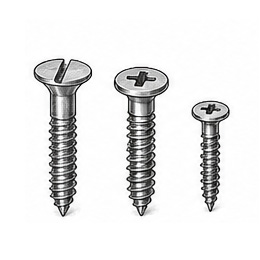
For products such as drywall screws, self-tapping screws, and self-drilling screws, steel grades are selected according to application requirements, ensuring a balance between hardness, ductility, and torque performance.
2. Wire Drawing and Surface Preparation
Before forming, wire rods are processed through wire drawing lines to achieve precise diameters and smooth surface finishes. This step improves dimensional accuracy and ensures stable performance during cold heading. Lubrication coatings applied during wire drawing reduce friction, protect tooling, and help prevent surface defects during high-speed production. JLHY uses multi-station cold heading machines to form fastener heads and shanks at room temperature. Cold heading provides several advantages:
High production efficiency
Minimal material waste
Improved strength due to continuous metal grain flow
This process is used for manufacturing screws, bolts, and special fasteners with consistent head shapes and precise dimensions.
3. Cold Heading: Strength Through Forming
Threads are formed using thread rolling rather than cutting. Rolling compresses the material to create strong, smooth threads with excellent fatigue resistance.
4. Heat Treatment & Surface Treatment
Heat treatment is a critical step for achieving required mechanical properties. JLHY applies controlled quenching and tempering processes to enhance hardness, tensile strength, and durability.
Each heat-treated batch is tested to ensure compliance with international standards such as ISO, DIN, ASTM, or customer-specific specifications.
To improve corrosion resistance and appearance, JLHY offers multiple surface finishes, including:
Zinc plating (blue, white, yellow, black)
Black phosphate for drywall screws
Mechanical galvanizing
Ruspert / Dacromet coatings
Plain or oiled finishes
Coating thickness, adhesion, and salt spray performance are strictly monitored to meet export market requirements.
5. Quality Inspection and Testing Standards
Professional manufacturers integrate inspection throughout production. Final testing typically includes:
Dimensional and thread checks
Hardness and tensile testing
Torque performance testing
Corrosion resistance testing
Buyers should request test data or inspection records to confirm product consistency and compliance.
6. Packaging, Labeling, and Traceability
Proper packaging protects fasteners during transport and ensures accurate inventory management. Export-ready suppliers provide clear labeling with specifications, quantities, and batch traceability.
With a process-driven manufacturing system and export experience, JLHY Fasteners supports global buyers seeking consistent, standards-compliant fastener solutions for construction and industrial applications.